










Attitude is everything.
Some of you may read this and think "Yeah, Ok, now get on to the good stuff". What you must realize is that without the proper mental attitude, the other topics will be of use for only a short period of time. Depression, loneliness, feelings of abandonment, despondency, and the feeling that nobody knows where you are or cares will conspire to kill you. If you have done your homework, practiced the techniques described, there is a very good chance you will survive if you have a positive mental attitude. Tell yourself that you WILL get out of this. You WILL persevere.
I have seen some survival books talk as though collecting water is easy, catching game with snares is simple and survival is something that can be taught in books. Try as they might, it cannot be. Survival is one of those things you need to learn first hand, be it going into the wilderness, or finding groups to teach you. To survive you must battle three things in this order:
Exposure
Dehydration
Hunger
You will die in a few hours if you cannot retain body heat. You could die of exposure in 72 degree weather! You will develop hypothermia when your body loses heat faster than you can produce it. You need calories to generate body heat. People die of hypothermia in warm water. The water is cooler than they are, subsequently the water absorbs body heat until their body can produce no more. It is a slow death.
When you breath your breathe causes water loss. Perspiration causes water loss. Evaporation from your eyes causes water loss. If you cannot replace these losses you will die. Drink water with undesirable elements such as microbes, parasites, etc. and you will develop diarrhoea. This will increase your fluid loss and your health will decline even quicker.
Food is the last thing you will need. In moderate climates, you can survive without food for up to 30 days. You will die without water in one or two in the desert! Finding edible berries and plants are the last things you need to learn. Rescue and conserving fluids and body heat are the primary survival skills. If you can survive long enough to get real hungry you are doing a good job. In extreme cold food is more important because your body converts food to heat.
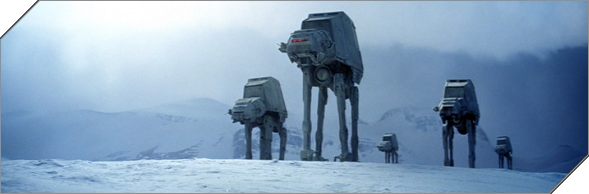
Exposure and Body Heat - Arctic
Time is running against you here. You must work quickly and conserve energy. After you have taken inventory, build a fire:
Hopefully you will have matches or a lighter. You must conserve these valuable items. Before you build your fire, pick a place for your shelter (see below). Now gather combustible materials. Cones from deciduous trees do not burn. Bark does not either. DO NOT waste matches trying to ignite them. Gather material in this order:
Very small twigs (matchstick thickness). Have at least a double-handful. They must be dry. To find dry sticks in the rain, search under the overhang of an embankment, under-side of logs, dead dry roots buried in an embankment, the center of a stump or dead tree (dug out with a knife).
Small sticks. You will need more of these, at least a quart - half gallon. Some of these may be slightly damp.
Bigger sticks. Twice the thickness of the small sticks before, even more of these.
Keep moving up in size until you are collecting branches/small logs. If the wood is available you will need as much as you can gather in an hour. Drift wood will work if it is dry.
Now that you have your wood it is time to build your fire. Take your time and do this right. DO NOT throw the fire together haphazardly. This will only waste fuel and increase the risk of the fire not lighting. Every match you have is like gold. Do not waste them. If you do this correctly you will only require one.
Take a medium size branch and lay it down. Now build a tiny lean-to with the small sticks by leaning them up against the branch. Take more and and lay them perpendicular to first layer, and parallel to the big branch. Use lots of very small twigs and leave enough gaps between them for the flames to rise up through and ignite the upper layers. If it is raining or windy, cover yourself with something and position yourself upwind of the fire to protect it. Now add the bigger sticks to the top of the your neat little lean-to, using a teepee shape, and surrounding the little lean to on all sides. Leave a small gap up close to the big branch to get your match under the pile. If you have a small slip of paper or lint from pockets, place it under the lean-to and ignite it. As your fire grows, start adding more and more sticks to get the fire very hot. Now add the larger sticks, the heat will dry them if they are damp.(Not if they are moss-covered or soaked through.) Keep building your fire in stages. DO NOT wait too long to add the next size larger sticks. The heat generated from the rapidly burning small ones is needed to dry and ignite the larger ones. As soon as you can, put some bigger pieces on by laying them across the big branch on the ground. Once your fire is going, DO NOT let it go out. If you need more fuel gather more wood and start building your shelter.
These are the shelters that can be assembled or utilized with ease:
Is there a snow bank nearby? Can you build a small one? You are going to dig a cave in the snow. The opening to be away from the wind. The cave has to be very small. For a snow shelter to be effective it must be below freezing. If not, melting snow will saturate your clothing and you will freeze. Hollow out a place to lie in the snow. If you have something to line the floor with it will be much warmer. If you have nothing but plastic or something, try to find evergreen tree limbs to line it with. You want as much between you and the cold ground as you can. You will lose more heat by being in contact with the cold ground than you will from the air. The air in your cave will warm and retain heat. If you have a small heat source you can place a vent through the roof to allow gas to escape. You must ration your heat source. You will need it more at night when the temperature drops. Luxuries to add will be more insulation, seat cushions, etc. and a barrier for the entranceway.
A Ranger Pile is a shelter used by small parties who lack bulky camping equipment or who for tactical reasons, must not risk fire or shelter construction. The first layer of men, four or five lies very close together on two ponchos snapped together. Next layer lies on top of the others, cross ways. Another layer on top of them. Remaining ponchos are snapped together and pulled over the top and tucked in around the sides. If a quantity of DRY pine needles, leaves, etc can be quietly collected, this can be used for insulation stuffing. Just pile it on each layer before the next gets on. This is how small recon teams survive without carrying a lot of equipment with them. There may be mild discomfort in close contact or from flatuence, but this is necessary to survive.
A vehicle will block the wind but the compartment is too big to retain body heat. You will freeze if you remain in a ground transport or aircraft unless there are heaters. However, during undercover missions, stealth is vital and therefore heat signatures must be concealed as much possible so this may not be an option. Strip cushions, carpeting, floor mats, insulation etc. from the vehicle to line your shelter with. If you have maintenance tools and can remove a panel you can use it as a reflector to direct heat in one direction from a fire.
If you are fortunate enough to have the materials to construct a lean-to, build one similar to the way you built your fire. Keep the openings away from the wind, and towards your fire. Use a reflector to direct the heat into your lean-to.
Clothing
What do you have to work with? The thinnest layer should be closest to your body, as should wool. If you have foam from seat cushions, stuff your shirt and trousers with it. It will work as insulation. Extra clothing can be stripped into pieces of about 5" x 4" and used as wrapping for extra socks. You want to have the material that best holds in heat closest to your skin. This same concept can be used when you have the luxury of a sleeping bag. Sleeping bags are designed to hold in heat much better than clothes. When you get into a sleeping bag, remove all of your clothes and lay on them. Naked, your body heat will be trapped between your skin and the bag. Otherwise your heat escapes through the thin material of your clothing, and stays between your clothes and the bag, until it dissipates.
If you have no clothes suitable for the environment you find yourself in, you will be forced to use the shelter for clothing. Keep your shelter VERY small and use insulation. This could be your only chance to survive. If there is plenty of snow/ice you will have a good water supply if you have a fire and a container to melt it in. DO NOT EAT SNOW. It will lower your body temperature and bring on hypothermia. Always melt it and get the water warm first.
Do not drink alcohol of any kind. It will thin your blood and increase your urine output. If it is strong enough, you can use it as a disinfectant, or to help ignite your signal fires if a friendly/neutral aircraft approaches.
Now that you have your fire and a shelter it is time to improve the odds of rescue. The intergalactic distress signal is three of anything or the Basic letters SOS. Do not build three fires because it is wasteful. Scrape out three large circles in the snow by dragging something around, however if it snows these will fill in. If you have access to lots of branches or something that provides a good contrast to the white snow, lay them out to form 3 large Xs. What looks big to you on the ground looks very small from an aircraft at several thousand metres above the ground. Your Xs should be 100 - 150 feet across and 75 feet apart. If you have the wood build three fires in the middle of each but do not light them. Keep your main fire going so that you will be able to take a torch to the other fires in a hurry.
Smoke will be quite visible from the air also. Large piles of deciduous tree needles smoke well, as does rubber, plastic, or oil. Be careful about burning critical supplies however. I would not throw a poncho, sheet of plastic, or rubber boots on the fire in a vain attempt to signal a distant plane. You will have to use common sense. If the plane cannot land near you, and has to radio for help, you could be there a while longer anyway. With bad weather it might take a rescue party several days to get you. If the pilot is an imbecile, or lacks a good navigation system, he might report your location as being 20 kilometers away from where you actually are.
Exposure - Desert
Since there is nothing in the desert to hold in the heat, it dissipates quickly after the sun goes down. Deserts can drop to near freezing over night. During the day the temperature will soar and fry your brain, dry you out and kill you. For this reason any movement should only be at night unless absolutely necessary. For shelter you must remain out of the sunlight. If possible, dig a hole to get in and cover it. Do not strip off your clothes. Have you ever wondered why the Tusken Raiders of Tatooine wear those long, heavy, hot looking clothing on their heads and bodies? It is because moisture evaporation is your worst enemy in the desert. Clothing helps keep in this moisture and slows evaporation. It must be loose enough to allow heat loss. You will need to stay warm at night, refer to the arctic topic above.
Water is the most important thing to consider in the desert, it must be conserved. Long term drinking of urine can make you sick, but if it is all that is available you will have to drink it. Some types of vegetation are succulent and contains water, as do the bodies of reptiles and other desert animals. Suck every drop you can from them, but avoid the poison glands present in some types of reptiles (they are usually behind the head in the neck). Beware of eating the internal organs of some creatures, however. They may contain toxic amounts of nutrients.
If you have plastic or a poncho you can collect water at night in the desert. Dig a hole (or use support sticks) as wide as the plastic. Make a hole in the plastic at the center. Stretch the plastic over the hole and weight down the edges with rocks. Press down the center of the sheet or tie it to a tock to pull it down. Place a container under the hole. When dew forms on the plastic it will roll down hill through the hole and it into your container. Use your poncho during the day as shade.
Do not drink alcohol, it will increase your urine output and aid in dehydration. The same goes for caffeine. It may keep you awake for a while, but it will also speed up dehydration.
Exposure - Jungle
Here, heat and sunlight are your worst enemies. Insects and water contamination are also major problems. The heat and humidity of the jungle makes for rapid bacteria growth. Any untreated wound will fester within a few hours. In a day or two a cut can become bad enough to cause gangrene. You must protect yourself by turning down sleeves, blousing your pants to keep insects out, and wearing gloves and a helmet. Stormtroopers have the luxury of full-head helmets.
Water must be boiled well to kill parasites. Safe water can be found in water vines. These are very thick vines that hang down from large trees. Cut one at a 45 degree angle, move up the vine and cut it off about three feet up or sever it to release the suction. Hold your mouth under the vine and the water will flow out. This water is safe to drink without boiling. Try not to let it run along the exposed outside of the vine though, that area will be covered with parasites.
Jungle streams are usually as deep as they are wide.
Most fruits are safe to eat if you wash them with sterile water first. The seeds of some may be poisonous. Many species of reptiles in the rainforests are highly toxic. They are recognized by their bright vivid colors. If you are very careful not to touch them, you can use their skin secretions to tip primitive projectile weaponry such as blowgun darts and spears.
Blow guns are difficult to make, but the knowledge may come in useful. Take a tree limb and split it length-wise. Scrape the bore of the weapon into both halves. It must be perfect. Allow it to dry and polish the bore halves smooth. The two sides must fit perfectly (This is harder than it sounds). Bind the two back together with bark or vine strips.
Darts are made from any wood that can be sharpened. To launch the dart a small tuft of fiber (like cotton) from the stem of a tree branch is balled around the base of the dart.
During the rainy season, grubs can be found in the center of trees. It may not sound all that appetizing, but given the choice of death by starvation or sucking down a few grubs, it is apparent which is the better option. Build a platform or hammock to get off of the ground when you sleep. Insects will eat you alive if you do not. Mud can be used to keep mosquitoes off.
The jungle is a Garden of Eden compared to the desert or the arctic. With a little common sense anyone should be able to survive.
Most poisonous plants that taste extremely bitter and nasty. If the leaf tastes mild it is probably safe to eat. When in doubt, try a little piece first and wait a couple of hours. If nothing bad happens try twice as much and wait again. Keep doing this until you’ve tried enough to have made you sick. If you are still in optimal condition then it is probably safe to eat. There are exceptions to this rule, most notably among berries.
You should educate yourself as much as possible about the enviroment before insertion. Pictures never look like the actual plant. Generally, if it crawls, walks, or slithers on its belly it is safe to eat.
This most important Escape Rule also applies to the Evasion Phase. You may have just escaped from POW custody, be the surviving member of an ambushed patrol or have been overlooked as enemy assault troops overran your position.
In any of these situations, you could be captured at any moment. You must now travel as far and as fast as you can. The further you escape from your last point of contact with the enemy, the wider the arc or area the hunter-killer force will need to search for you and the greater the area that tracker animals may have to cover to pick up your scent.
Rule 2 - Evade In Pairs
The larger the evading group is, the easier it will be to track down. If possible, try and break down into pairs as this could split up the team tracking you or even leave them all tracking just one pair. In most situations, two heads are better than one and when rest becomes a necessity, one can remain on guard while the other sleeps.
Rule 3 - Assume You Are Being Hunted
An evader has a very limited view of events around him and it's very easy to assume that he has given the enemy the slip. Often this is a mistaken view. Besides which, always assuming you are being hunted focuses the mind and this should lead to you making less mistakes.
Rule 4 - Carry A Compass
The sensible soldier will always carry a minicompass in his Survival Kit plus one hidden in his clothing. This is one of the most treasured E&E possessions. To allow for all eventualities though, learn to make an emergency compass by magnetizing a needle and sitting it on a free floating leaf on water. Practice now as you will not get time while an evader.
Rule 5 - Make Or Get A Map
Maps are important. Before a mission make a simple map on a sheet of paper from your waterproof notepad. Show just the basic routes, roads, rivers and major topographical features, then sew it into your uniform. If captured, while awaiting escape, make a rudimentary map by drawing on the inside of your clothing as this will greatly aid your navigation plans. Once on the run, acquire a better one - search bodies, deserted buildings and, particularly in an urban environment, look inside vehicles or even check out phone boxes.
Rule 6 - Ignore The Hay Barn
Do not assume the 'Hay Barn' mentality. In other words, never hide in obvious places. The barn on the hill will look tempting refuge with hide, but this is also the first place the hunter force will search.
Rule 7 - Become a Magpie
Never pass-by anything that could be of use. A discarded waste disposal bag or even a plastic fertilizer bag can make an emergency waterproof overgarment. An abandoned metal helmet, not too common in these days of duraplast composites, makes a good cooking pot but look out for any metal container that will do this job and also transport drinking water.
Rule 8 - Camouflage Your Tracks
You must camouflage signs that you have passed, and especially your footprints, from man trackers. This is because the most common form of track to find and easiest to follow is the markings you leave on the ground-known as ground spoor. an even better find for an experienced tracker is a full bootprint (a confirmed spoor) from which he will be able to tell how fast you are moving, how tired you are and much more information on you.
With a consecutive pair of prints he can tell how fast you are travelling, what distance you are covering and even if you are carrying a load. Despite your boot probably having the same tread pattern as the rest of the guys in your unit, individual wear marks and tread damage make your boots as individual as your fingerprints. No wonder trackers call full bootprints a confirmed spoor.
Consequently, avoid walking on soft muddy ground. Instead try to find hard, rocky surfaces. Remember, though, not to disturb loose rocks as these would give a tracker recognizable, though less useful, ground mark. Of course there will be times when you have no choice but to walk on soft or muddy ground, so remember the following techniques. They may only temporarily confuse trackers, but they may gain you valuable time.
Rule 9 - Don 't Leave Aerial Spoor
Spoor above the ground or overhead may not be as easy to spot as ground spoor, but a good tracker will find it nevertheless.
Rule 10 - Do not Leave Scent
Tracker animals follow the microscopic body scent particles that continually fall from your body and settle on or just above the ground.Their remarkably sensitive noses will follow your previous route as accurately as if you could draw the animal a map. Even so, there are ways to slow down, confuse and even defeat tracker animals.
Rule 11 - Camouflage Your Identity
It should almost go without saying, that you practice the basic rules of camouflage and concealment when resting, laying-up, approaching a dangerous area, etc. You should also practice camouflage and deception when traveling.
Rule 12 - Disguise Your Hide
Sooner or later you will need to lay-up or rest. Again, leave no traces of your presence. It is a good idea to rest for 5-10 minutes in every hour that you travel. Don't just stop anywhere though. Choose an area of good cover and try to leave no trace of your LUP (Laying Up Point). A longer LUP occurs when you sleep. Lie facing the ground, and if you have a ground sheet or something similar, cover yourself with it. This should concentrate your scent in one place. Before you leave, cover your sleeping area with soil and natural debris to mask the scent.
Always bury any food waste, camp fire debris, feces, urine or anything connected with your stay. Try not to contaminate your skin with waste material. Finally, cover disturbed soil with natural debris. Waste on the surface will attract parasitic insects in warm weather and will be easily spotted by sentinent trackers, and an animal's nose will pick up the scent a long way off.
Rule 13 - Disguise Your Fire
Opinions vary as to exactly when you are safe enough to light a fire. However, sometimes it is crucial to purify food or water by cooking or boiling, to provide warmth to prevent hypothermia. If you have to light a fire, ideally you should dig a fire pit deep enough to hide the flames. Try not to make the fire too big and ensure that flames to not show above ground. Use only small pieces of fuel. Dig a separate air shaft at an angle to the pit as this will make the fire burn quicker and prevent excessive smoke. If the ground is too hard to dig, is too waterlogged, or a fire pit is impractical for some other reason, light the fire under a canopy of leafy foliage to disperse smoke. Alternatively, light a surface fire against a high wall.
Above all else, when Escaping and Evading, DO IT QUICKLY and DO IT CAREFULLY!
Resistance is one of the toughest parts of this course, as it is designed to teach you how to deal with being captured. Feelings of loneliness, depression and abandonment are bound to set in without the proper training.
Yet at the same time, it is also one of the single most difficult sections to attempt to teach. Each mind will differ and not everyone will react the same to being captured. I cannot go into great detail, as this skill requires you to learn it the hard way - during the SERE courses offered through the Imperial Army at the Imperial Military Academy on Carida. The key is to keep it in your head that the Empire has not and will not forget any of you. Help WILL always come. Your enemies will try to get inside your head - resist the urge to give in. While these are by no means very helpful, use them as a base. Members interested should contact the SERE Instructors as to course availability at the Imperial Military Academy.
You are on the run behind enemy lines with just the the clothing/armor/uniform you stand in, what should you do? However, it is not just the fast jet jockey and winged dagger trooper who could find themselves in the role of unwelcome guest behind enemy lines, being hotly pursued by a hunter-killer force. Once the shooting starts, at any time it could happen to YOU.
The list is endless, but ask yourself honestly these two questions. "If I found myself in any of the above situations, would I know exactly what my very first move should be?" And then, as the minutes tick by, "What should I do next?"
Now you are probably thinking that you should start water gathering, building a shelter and instituting all the other 'surviving in the wilds' skills. Wrong! Long term evaders such as downed pilots or escapees from temporary POW camps deep inside enemy territory on a contested world, may need to travel for weeks or even months before reaching friendly territory, so 'wild' survival skills are very important For them. However, only a very few soldiers ever become long term evaders. Most Escape and Evasion (E&E) in any conflict is short term, lasting anything from about one hour up to 48 hours.
More difficult to escape, however, are prison ships, asteroids and heavily defended enemy bases. If a group of Imperials are captured, attempt to free them, including the pilots. A vessel can then be hijacked from the hangar bay and hostages taken.
What is most important in short term evasion is to understand the few basic rules of E&E based around anti-capture and anti-tracking techniques. Without this knowledge, the chances are that you will be shot, taken prisoner or recaptured very quickly. If you do not understand the fundamental anti-tracking skills, the chances are that you will not be able to use your survival skills without tipping off the enemy. So it is important that you learn the basic ground rules of short term escape and evasion first.
1st Rule - Escape Quickly
This is the first and most important rule of E&E and can be applied to many different situations. In this case, Escape Rule 1 refers to the period immediately after capture by the enemy. You must escape at the first opportunity because:
2nd Rule - Don't Talk
Being captured by an enemy is a severe psychological shock, even for experienced soldiers. Only those who have experience of such an event can appreciate the desire to talk to captors, sometimes without being able to stop. You must steel yourself from the very first moment of captivity to say as little as possible. Under the Imperial Doctrine you are expected to give no more than your name, rank, number and date of birth but resist the desire to say anything else.
3rd Rule - Be The Grey Man
After capture, most soldiers adopt one of two attitudes. They either try to appeal to their captors by smiles and other friendly gestures, or they show defiance by scowling, cursing or exhibiting signs of aggression. Do neither! You must attract as little attention from your captors or jailers as possible. This will prevent you from being singled out for interrogation, when you will be under closer guard, and will greatly help your chances of escape. To play the grey man, stand or sit motionless with head slightly bowed. Avoid eye contact, but if forced to look at the enemy, focus on your opponent's forehead and show no emotion. Speak only if spoken to.
-Originally compiled by General Munro Burton, from various internet sources