







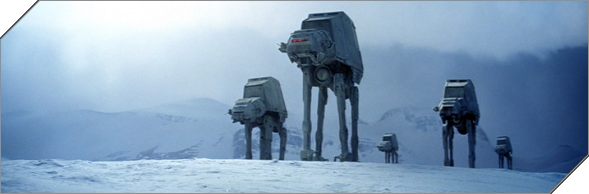



Military strategy and tactics is a collective name for planning the conduct of warfare. Derived from the ancient word strategos, strategy was in ages past seen as the "art of the general.” Military strategy deals with the planning and conduct of campaigns, the movement and disposition of forces, and the deception of the enemy. A wise and ancient military commander once called military strategy as "the employment of battles to gain the end of war." Military strategy is just one of a triumvirate of "arts" or "sciences" that govern the conduct of warfare; the others being tactics, the execution of plans and manœuvering of forces in battle, and logistics, the maintenance of an army.
Throughout history, the beings in the galaxy have been at war with each other, be it over planetary system rights, credits, beautiful women, or anything that a particular species deems worth fighting for. No matter the cause or the reason for wars and battles, the basic objectives of strategies and tactics stay the same:
POSITIONING:
This is the way in which your troops are placed. There are basic mistakes that even the lowest Trooper can’t make. For Example: A Mobile Proton Torpedo Launcher is not a good frontline unit. This may seem obvious, but it is a crucial principle. Troop placement can mean the difference between a powerful flank and a broken one. A group of troopers that have experience with anti-vehicle assaults should be used for that purpose. Positioning is concerned with considering your trooper’s attributes carefully and assessing the best possible place to put them.
INFORMATION:
This has to be one of (if not the most) important principles of tactics. This can range from simple sightings by sentries, to special Intel surveillance reports. One of the best advantages to have is good information on your enemy’s movements and tactics. However, keep in mind that this information will be difficult to get, because any commander worth his rank will have put up strong anti-espionage defenses. The importance of information cannot be stressed enough.
TROOPS:
This is important to any situation: Generally speaking, if you have more troops, you’re more likely to win. But a small, elite, well-equipped force can overcome hordes of green (novice/inexperienced) soldiers that are poorly equipped. It will be rare that you will have a truly elite force or a massive one, so you must try to manage your troops in such a way that they are protected from as much of the enemy as possible, with the lowest causalities sustained, while being able to strike at the enemy with enough force to defeat them. For example: Anti-tank units are good against tanks, so placing them to counter an infantry unit would be a waste of resources. Knowing the skills and strengths of your troops (Information pops up again) will give you an advantage over your enemy.
EQUIPMENT:
Equipment is what weapons, vehicles, and systems you have at your disposal. This is important because certain weapons are more effective against certain targets. Arming your troops with PLX-4 missile launchers makes them more capable of destroying enemy vehicles, for example.
TERRAIN:
This can affect the outcome of any battle, or skirmish. Terrain, as you should know, is the land, and all its features: Mountains, forests, lakes, swamps etc. The effect of terrain is not only a physical problem to a fighting force, it is mental problem too. The land can be tough to travel through or be boggy etc, but this affects the morale of the troops (see strategical doctrines below). Terrain gives distinct advantages, and disadvantages:
Advantages: Large pieces of terrain (Mountains, lakes) can be used to disrupt enemy maneuvers, making it harder to sustain an attack. Small pieces of terrain (Outcrops of rock, rivers) could be used to slow the enemy’s advance, or to make their attack falter.
Disadvantages: These pieces of terrain can be used against you, in the same way that you used it against your enemy.
MORALE:
Morale is a term for the capacity of people to maintain belief in an institution or a goal. The term applies particularly to military personnel. A wise commander once noted that, “The aim of an entity in war is to subdue the enemy's will to resist.” And indeed, this is the goal of the Army Commander. The surrender of the enemy is preferable to utter destruction, in most cases. Material factors (such as remuneration, food and shelter) can affect it. Momentum can also play a large part in morale; but that is discussed in our next, and last, point.
On the flip side, morale is probably one of the hardest principles to maintain for your own troops. Morale is how they feel about being on the battlefield. This can affect how they fight and how well they fight. Troops that are on the field with low morale are more likely to break when attacked. Morale and leadership are intertwined because if you were a good leader (leading from the front, praising your troops for the battles they fight, etc.) then the morale would be high. But if you are a bad leader (hiding away in a bunker 5 miles behind the reserve lines, getting awards but not awarding your troops, etc), then the morale could be low. Some examples of morale boosting acts:
Remember, a happy soldier is a loyal soldier.
PRINCIPLE OF MASS:
Given all things being equal, sending a single tactical allied unit to combat a single tactical enemy unit will result in 50% chance of defeat, resulting in a 1 to 1 loss ratio at the strategic level. However, sending two or more units to combat a single enemy unit will result in a loss ratio of less than 1 to 1. This has to do with numerical advantages. However, remember that an advantage in technolgy or morale can also contribute to a battle, not just “strength in numbers.”
--Originally compiled by Generals Munro Burton and Kyros Terrian